Tuesday, April 7, 2020


Today’s Gospel – Tuesday of Holy week


20Ἦσαν δὲ Ἕλληνές τινες ἐκ τῶν ἀναβαινόντων ἵνα προσκυνήσωσιν ἐν τῇ ἑορτῇ·

21οὗτοι οὖν προσῆλθον Φιλίππῳ τῷ ἀπὸ Βηθσαϊδὰ τῆς Γαλιλαίας καὶ ἠρώτων αὐτὸν λέγοντες· κύριε, θέλομεν τὸν Ἰησοῦν ἰδεῖν.

22ἔρχεται ὁ Φίλιππος καὶ λέγει τῷ Ἀνδρέᾳ, ἔρχεται Ἀνδρέας καὶ Φίλιππος καὶ λέγουσιν τῷ Ἰησοῦ. 

23Ὁ δὲ Ἰησοῦς ἀποκρίνεται αὐτοῖς λέγων· ἐλήλυθεν ἡ ὥρα ἵνα δοξασθῇ ὁ υἱὸς τοῦ ἀνθρώπου.

24ἀμὴν ἀμὴν λέγω ὑμῖν, ἐὰν μὴ ὁ κόκκος τοῦ σίτου πεσὼν εἰς τὴν γῆν ἀποθάνῃ, αὐτὸς μόνος μένει· ἐὰν δὲ ἀποθάνῃ, πολὺν καρπὸν φέρει.

25ὁ φιλῶν τὴν ψυχὴν αὐτοῦ ἀπολλύει αὐτήν, καὶ ὁ μισῶν τὴν ψυχὴν αὐτοῦ ἐν τῷ κόσμῳ τούτῳ εἰς ζωὴν αἰώνιον φυλάξει αὐτήν.

26ἐὰν ἐμοί τις διακονῇ, ἐμοὶ ἀκολουθείτω, καὶ ὅπου εἰμὶ ἐγὼ ἐκεῖ καὶ ὁ διάκονος ὁ ἐμὸς ἔσται· ἐάν τις ἐμοὶ διακονῇ τιμήσει αὐτὸν ὁ πατήρ.

27Νῦν ἡ ψυχή μου τετάρακται, καὶ τί εἴπω; πάτερ, σῶσόν με ἐκ τῆς ὥρας ταύτης; ἀλλὰ διὰ τοῦτο ἦλθον εἰς τὴν ὥραν ταύτην.

28πάτερ, δόξασόν σου τὸ ὄνομα. ἦλθεν οὖν φωνὴ ἐκ τοῦ οὐρανοῦ· καὶ ἐδόξασα καὶ πάλιν δοξάσω.

29ὁ οὖν ὄχλος ὁ ἑστὼς καὶ ἀκούσας ἔλεγεν βροντὴν γεγονέναι, ἄλλοι ἔλεγον· ἄγγελος αὐτῷ λελάληκεν.

30ἀπεκρίθη Ἰησοῦς καὶ εἶπεν· οὐ δι’ ἐμὲ ἡ φωνὴ αὕτη γέγονεν ἀλλὰ δι’ ὑμᾶς.

31νῦν κρίσις ἐστὶν τοῦ κόσμου τούτου, νῦν ὁ ἄρχων τοῦ κόσμου τούτου ἐκβληθήσεται ἔξω·

32κἀγὼ ἐὰν ὑψωθῶ ἐκ τῆς γῆς, πάντας ἑλκύσω πρὸς ἐμαυτόν.

33τοῦτο δὲ ἔλεγεν σημαίνων ποίῳ θανάτῳ ἤμελλεν ἀποθνῄσκειν.

34Ἀπεκρίθη οὖν αὐτῷ ὁ ὄχλος· ἡμεῖς ἠκούσαμεν ἐκ τοῦ νόμου ὅτι ὁ χριστὸς μένει εἰς τὸν αἰῶνα, καὶ πῶς λέγεις σὺ ὅτι δεῖ ὑψωθῆναι τὸν υἱὸν τοῦ ἀνθρώπου; τίς ἐστιν οὗτος ὁ υἱὸς τοῦ ἀνθρώπου;

35εἶπεν οὖν αὐτοῖς ὁ Ἰησοῦς· ἔτι μικρὸν χρόνον τὸ φῶς ἐν ὑμῖν ἐστιν. περιπατεῖτε ὡς τὸ φῶς ἔχετε, ἵνα μὴ σκοτία ὑμᾶς καταλάβῃ· καὶ ὁ περιπατῶν ἐν τῇ σκοτίᾳ οὐκ οἶδεν ποῦ ὑπάγει.

36ὡς τὸ φῶς ἔχετε, πιστεύετε εἰς τὸ φῶς, ἵνα υἱοὶ φωτὸς γένησθε. ταῦτα ἐλάλησεν Ἰησοῦς, καὶ ἀπελθὼν ἐκρύβη ἀπ’ αὐτῶν. [NA28]


Today’s Gospel also comes from the 12th chapter of John.  Let’s concentrate on the last verses of today’s text.   In verse 34 we are told that it was the belief of the crowd that the Messiah would last forever, and the crowd is wondering how it is that the Messiah should be raised up. If he is forever, then there is no point to dying, for He is eternal.  How is it possible to speak about the Son of Man being lifted up.  There is a time-eternity contrast here that leaves the crowd confused, just as we today are puzzled about time and eternity. We assume that the existence of God, as an eternal being, is an existence which endures all times.  If one accepts a Platonic picture of time as different in essence from eternity, eternity is not “all times” but instead a totally different category outside of time.  Time is a human concept and God is above all human conception in this sense.  Eternity is fundamentally different from time and cannot be known by human intellection, just as all properties that belong to the deity are beyond human intellection.

But we should realize that Jesus is talking about the Son of Man, the archetype of Humanity.  Is he claiming Messiahship?  The crowd wants to know “who is the Son of Man?” ὁ υἱὸς τοῦ ἀνθρώπου;  Notice it is not ὁ υἱὸς τοῦ θέου, but ὁ υἱὸς τοῦ ἀνθρώπου, they are inquiring about.  One can have all kinds of explanations for this, and one of those explanations is a Theological equation of the Son of God with the Son of Man.  But I’m not convinced, I’m like the Greeks in the crowd, I understand the conceptual difference.  In my world view Jesus refers to himself as the son of man (the archetype of what it is to be human), and not claiming Divinity for himself.  So the charge of blasphemy wouldn’t be applicable, any attorney worth his salt could point this out. 


What follows is a brief discourse on light, harkening back to the Prologue of John’s Gospel where Jesus’ life is the light of mankind – ἡ ζωὴ ἦν τὸ φῶς τῶν ἀνθρώπων.  But there is also a tinge of the doctrine of the Essenes, with their war between the children of light and the children of darkness - ἵνα υἱοὶ φωτὸς γένησθε.  It is pretty clear that what Jesus wants to convey is that the son of man is the archetype of mankind enlightened.  His life and teaching is what we ought to do, as His followers.  Death has no hold on what is the right thing to do.  In an important sense Jesus is the ultimate deontological moral Philosopher, even Thomas Jefferson recognized this when he put together (literally cut and pasted) his book The Life and Morals of Jesus of Nazareth.  Light upon our path shows us the way to go, while darkness leaves us confused, and we stumble. I am reminded of Immanuel Kant’s subjective formulation of the Categorical Imperative: “Act in such a way that you treat humanity, whether in your own person or in the person of any other, never merely as a means to an end, but always at the same time as an end.”


In the end Jesus departs after saying these things and hides from the crowd.  A physical demonstration of what He is talking about; the light is only there for a little while and after that the choice is ours to enlighten our own path (taking the light as the children of light) or stumble around in the dark.  Again we are on our own, we can no longer merely depend on Jesus as the lantern leading us along, we must shine our own light on our own path, presumably as children of the light with the light of the Son of Man in mind.


Again; we ARE on our own; we have an exemplar, but the judgment as to what to do is up to us…

Monday, April 6, 2020


Today’s Gospel: - Monday of Holy Week


ΚΑΤΑ  ΙΩΑΝΝΗΝ

121Ὁ οὖν Ἰησοῦς πρὸ ἓξ ἡμερῶν τοῦ πάσχα ἦλθεν εἰς Βηθανίαν, ὅπου ἦν Λάζαρος, ὃν ἤγειρεν ἐκ νεκρῶν Ἰησοῦς.

2ἐποίησαν οὖν αὐτῷ δεῖπνον ἐκεῖ, καὶ ἡ Μάρθα διηκόνει, ὁ δὲ Λάζαρος εἷς ἦν ἐκ τῶν ἀνακειμένων σὺν αὐτῷ.

3Ἡ οὖν Μαριὰμ λαβοῦσα λίτραν μύρου νάρδου πιστικῆς πολυτίμου ἤλειψεν τοὺς πόδας τοῦ Ἰησοῦ καὶ ἐξέμαξεν ταῖς θριξὶν αὐτῆς τοὺς πόδας αὐτοῦ· ἡ δὲ οἰκία ἐπληρώθη ἐκ τῆς ὀσμῆς τοῦ μύρου. 

4Λέγει δὲ Ἰούδας ὁ Ἰσκαριώτης εἷς [ἐκ] τῶν μαθητῶν αὐτοῦ, ὁ μέλλων αὐτὸν παραδιδόναι·

5διὰ τί τοῦτο τὸ μύρον οὐκ ἐπράθη τριακοσίων δηναρίων καὶ ἐδόθη πτωχοῖς;

6εἶπεν δὲ τοῦτο οὐχ ὅτι περὶ τῶν πτωχῶν ἔμελεν αὐτῷ, ἀλλ’ ὅτι κλέπτης ἦν καὶ τὸ γλωσσόκομον ἔχων τὰ βαλλόμενα ἐβάσταζεν.

7εἶπεν οὖν ὁ Ἰησοῦς· ἄφες αὐτήν, ἵνα εἰς τὴν ἡμέραν τοῦ ἐνταφιασμοῦ μου τηρήσῃ αὐτό·

8τοὺς πτωχοὺς γὰρ πάντοτε ἔχετε μεθ’ ἑαυτῶν, ἐμὲ δὲ οὐ πάντοτε ἔχετε.

9Ἔγνω οὖν [ὁ] ὄχλος πολὺς ἐκ τῶν Ἰουδαίων ὅτι ἐκεῖ ἐστιν καὶ ἦλθον οὐ διὰ τὸν Ἰησοῦν μόνον, ἀλλ’ ἵνα καὶ τὸν Λάζαρον ἴδωσιν ὃν ἤγειρεν ἐκ νεκρῶν.

10ἐβουλεύσαντο δὲ οἱ ἀρχιερεῖς ἵνα καὶ τὸν Λάζαρον ἀποκτείνωσιν,

11ὅτι πολλοὶ δι’ αὐτὸν ὑπῆγον τῶν Ἰουδαίων καὶ ἐπίστευον εἰς τὸν Ἰησοῦν.  [NA 28]


This lesson from John is a compilation of many familiar stories, from Mary washing and perfuming Jesus feet, to raising Lazarus from the dead. But that aside, I would like to concentrate on Judas and his admonition to sell the perfume, not waste it, and give the money to the poor.  Judas was the accountant/treasurer for the disciples as we are told.  But Jesus replies: “τοὺς πτωχοὺς γὰρ πάντοτε ἔχετε μεθ’ ἑαυτῶν, ἐμὲ δὲ οὐ πάντοτε ἔχετε.”


I fear those of us who are wealthy or middle class often quote this passage to justify our neglect of poverty and those who suffer from it.  Curiously, Jesus is right, we will always have poor among us, and giving to the poor is merely a salve for the wound of the impoverished, and perhaps a salve for our consciences too.  Unfortunately if we give some meager sum to the poor they are still poor, and in a very important sense become dependent on our generosity, rather than on their own resources regardless of how meager those resources may be. It’s simple mathematics really. We might, and often do say, that the poor need to pull themselves up from their bootstraps, but then again, their boots must have straps in order to do that.  Now of course if we give the poor employment the situation differs.  The employed have dignity, at least to a measure.  That’s why our politicians keep speaking about “Jobs, jobs, jobs.” And then again employment may just be the straps for the boots. But then there is a second part to Jesus’ reply: “you will not always have me.”  Now it may seem egotistic for Jesus to say this, but there is a lesson here, it’s like Jesus is telling us “after I’m gone, you are on your own.”  And if that is so, we are left to our own devices as to what to do about poverty.


I find this remark of Jesus particularly interesting to occur in the Bethany- the raising of Lazarus from the dead story.  Perhaps John is sending us a message here about the raising up the impoverished, just as Jesus raised Lazarus, after all poverty is a kind of death – a death of self worth and dignity. Anyone who has ever been unemployed, even for a short while, realizes this. The Philosopher in me wonders about the message being sent, not so much the messenger, but the divine wisdom that we all may tap into, some two millennia post Jesus.  Resurrection is not just about being raised from the dead, but being raised up to a new life, and newness of life.  Perhaps we can think about giving the impoverished some straps for which to pull on their boots.  This is particularly important today and tomorrow because of the vast numbers of unemployed due to the plague (virus) now infecting our world.


We ARE on our own; the judgment as to what to do is up to us…


Saturday, April 4, 2020


The Cosmic Justice Hypothesis:

This is a common hypothesis best expressed by MLK Jr.: “The Arc of the Moral Universe is long, but it bends toward Justice”.  The other day I ran into a post by someone claiming that Covid-19 was God’s punishment for abortion and homosexual marriage.  Really?  We should examine what the Cosmic Justice Hypothesis really says and why we ought to believe it.  ‘In the fullness of time, the sins of individuals and their heroic deeds will be punished or rewarded.’   Most people of religious faith believe this and perhaps rightly so.  Life would be rather meaningless if virtue was not rewarded, or moral error eventually punished.  But questions remain…  Why for instance would the Universe eventually punish wrongdoing? Why on earth would virtue, if it can be had, be rewarded, especially if that virtue is not exercised in action.  Is it virtuous to condemn one’s fellow being because of a moral mistake, or should one make every attempt to mitigate the consequences of said mistake.  I make mistakes and my life is full of errors, does that entail that in the end I will be punished, rather severely because of the sheer volume of errors, I might add.  I think not and hope not.  After all I know my Moral failings, they are mine, I own them, no one else can be judged for them.  I often say to people who are anxious to point out my faults, that they have no right to point them out, because they don’t own them, I do, they are mine and I guard them quite closely. 

Our common inclination is to believe that Justice is Fairness.  We think this from little on.  We want to be treated fairly, and in some cases we fail to treat our fellows with fairness, perhaps many.  We are selfish about fairness, we want it for ourselves whether or not our fellows, human or otherwise, get it, or even deserve it.   That’s a problem isn’t it?  We want, that is desire that people be fair with us, but care less if that fairness extends to everyone.  Perhaps this Covid-19 will teach us lessons we ought to learn, that we are all in the same boat and if we desire to be treated fairly, then we are required to also be fair. Simply put, what goes around comes around. We all believe in some form or other that our errors are mitigated by circumstances, and that fairness requires that we be judged by others with those mitigating circumstances in mind.  But suppose those mitigating circumstances are unknown and not on full display, can we expect to be judged by those mitigating circumstances.  Let me propose that all errors have mitigating circumstances, and some actually mitigate, but others are mere concoctions of our own making to lessen the burden of the guilt we feel. There is a strong sense in which Justice requires mercy.  We can make things fair in a John Rawls sense, but leave those who are handicapped physically or morally in the dust, so to speak.  There is a sense in which those who are handicapped should receive a larger portion of fairness, if there is such a thing.  In order to make things even or fair we need to make sure as best we can that access to fairness is obtainable, like for instance access to a building for those who are wheelchair bound.

Since we are all on the same boat in a remote part of the universe sailing through the cosmos together, it seems most appropriate to let go of our selfish egoism and adopt a more altruist outlook.  After all a virus doesn’t care or even know what you believe, or whether you are rich, or poor, enterprising or lazy, religious or not, virtuous or immoral, strong or weak, handicapped or not, old or young, it just wants to have someone to host it, and a place to temporarily reside. That’s right it will reside only temporarily in someone, and then move on.  We would do good to remember that; and that if we are careful the virus will run its course and we will be free of it.  That is of little consolation to those who have it, but the moral thing to do is to prevent its spread as best we can, so that eventually it dies out within the population. In other words, we ought to adopt an altruistic stance against the invisible enemy, and set our selfish egoist tendencies aside for once.   Ayn Rand’s ideas will not work here.  Perhaps the answer to the earlier question is; that moral failings are eventually punished in order to teach a lesson, a lesson the Universe is most willing to teach.

Sunday, November 12, 2017

Today's Epistle


Today’s Epistle reading --

13Οὐ θέλομεν δὲ ὑμᾶς ἀγνοεῖν, ἀδελφοί, περὶ τῶν κοιμωμένων, ἵνα μὴ λυπῆσθε καθὼς καὶ οἱ λοιποὶ οἱ μὴ ἔχοντες ἐλπίδα.
14εἰ γὰρ πιστεύομεν ὅτι Ἰησοῦς ἀπέθανεν καὶ ἀνέστη, οὕτως καὶ ὁ θεὸς τοὺς κοιμηθέντας διὰ τοῦ Ἰησοῦ ἄξει σὺν αὐτῷ.
15Τοῦτο γὰρ ὑμῖν λέγομεν ἐν λόγῳ κυρίου, ὅτι ἡμεῖς οἱ ζῶντες οἱ περιλειπόμενοι εἰς τὴν παρουσίαν τοῦ κυρίου οὐ μὴ φθάσωμεν τοὺς κοιμηθέντας·
16ὅτι αὐτὸς ὁ κύριος ἐν κελεύσματι, ἐν φωνῇ ἀρχαγγέλου καὶ ἐν σάλπιγγι θεοῦ, καταβήσεται ἀπ’ οὐρανοῦ καὶ οἱ νεκροὶ ἐν Χριστῷ ἀναστήσονται πρῶτον,
17ἔπειτα ἡμεῖς οἱ ζῶντες οἱ περιλειπόμενοι ἅμα σὺν αὐτοῖς ἁρπαγησόμεθα ἐν νεφέλαις εἰς ἀπάντησιν τοῦ κυρίου εἰς ἀέρα· καὶ οὕτως πάντοτε σὺν κυρίῳ ἐσόμεθα.
18Ὥστε παρακαλεῖτε ἀλλήλους ἐν τοῖς λόγοις τούτοις.

1 Thessalonians 4:13-18 (NA 8)

I have already written about today’s Gospel and the Parable of the Ten virgins with their Lamps, so today I thought I should take on the Epistle reading.

From my genealogical studies I have taken pictures of various grave-stones for my records of my genealogy.  On one was inscribed “Asleep in Jesus”.  In earlier graves and Bible entries were inscribed words in Dutch which translated meant “Asleep in the Lord”.  My son in law, who is not very religious, laughed at the silliness of such an inscription.  I tried to explain that it was an expression, not of fact, but of faith, but I don’t think I convinced him.

A while back I went to my Oncologist for a review of my case and met a woman 12 years my senior there in the waiting room.  She engaged me in conversation and reminded me that I was a Philosopher, so I should know the answer to the question: “is there life after death”.  I stumbled around a bit and answered her with something akin to “they say there is”.  She replied: “I hope not, because, frankly, I cannot stand one more day of this pain, and I want it to end”.  I was a bit shocked, but not really, because I understood what she was saying.  In some ways we don’t want to just go to sleep and await the return of the Lord, we want the pain and grief to end, and that is all we require - a finality to it all.

I know why I’m a Philosopher and not a Pastor, because I couldn’t give her the pleasant platitudes we find in today’s Epistle reading.  I’m sure there are many more capable persons than I in that endeavor to offer comfort to the dying, but I remain the Philosopher always full of questions.  But I think I find questions very comforting.   Sometimes, the right questions are more important than the platitudinous answers.  Perhaps I fit in better with the Psalmist than Paul. I cannot it seems find it in me to follow the imperative of v.18.  In the existential struggle we humans find ourselves in our daily lives to find meaning in life and what we do to live that life, perhaps we ought more to question ourselves than God, but we cannot escape the notion that: if there is a God then why….

Ultimately we are faced with the question of the meaning of being, and what one ought to do to authentically be.  These are not really just philosophical questions, but essentially very personal too.  Not everything is logical analysis, or Metaphysical speculation, but also personal and maybe high minded lunacy, yet at the same time existential.  If nothing else, the reading of some Continental Philosophers, Playwrights, and Novelists should teach us that much.  I tend to believe that the Kingdom of God is not some far off place in the sky we shall go after death and live for evermore, but following Luke’s account of Jesus teaching, the Kingdom of God is within (17:21), and that means here and now. And what we make of that ‘here and now’ is what counts.

Perhaps we should ask, not of God but of ourselves:

"What are we that we should be mindful of ourselves?"


Thursday, November 9, 2017

The Greatest Game Ever Played


The Greatest Game Ever Played –

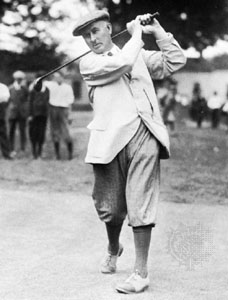
Disney Studios produced a fine film with this title, a semi-historical account of the 1913 US Open and the Story of Harry Vardon, a peasant farmer’s son from the Island of Jersey yet one of the greatest golfers of all time, and Francis Ouimet a young caddy, ditch digger’s son, who manages to qualify for and win the Open becoming Golf’s greatest ambassador.. Like fine literature, the movie is filled with metaphors. analogies, and lessons we ought to pay attention to.  There is a flashback scene in the movie where Vardon is a young lad being evicted from his home so that a group of men in black coats can build a golf course on the property.  “What’s golf?” He asks and the answer comes:  “Golf is game for gentlemen and not for the likes of you.”  The age old conflict between the Aristocrats of Society (gentlemen) and the Peasants (working class) is found throughout the movie.
  
The very name of the film is a metaphor of course, because the greatest game is not golf, as the reader knows, it is, and always will be, politics and since the rise of Democratic Republics in the Renaissance and Enlightenment eras, the conflict between the Peasantry and the Aristocracy has been dominant in that game, even as it is today.

What the Aristocrats fear the most is that they might be exposed and their power over others may be diminished.  They might even get told what it means or ought to mean to be a gentleman by the likes of Harry Vardon, a person they may have cultivated to do the winning for them. They fear that someday, somewhere a ditch-digger’s son, like Francis Ouimet, may show them up and demonstrate the failures of the aristocratic pretense by actually winning.   

When people accuse others of class warfare, it is no doubt from those who have, who are accusing those who have less or not at all, of that warfare.  But in fact we have always had class warfare.  The Aristocrats of earlier times have maintained their feudal positions despite the democratic ideals of most contemporary Republics.  Aristocrats do not earn their wealth through their own work, they earn their wealth through inheritance and ownership; they pretend that we too can become Aristocrats by hard work and education.  But can we?

Are not the educated and well educated servants to those who own and have inherited their positions and wealth?  Even government bureaucrats and representatives are servants to those who pay them for their labor, and in most cases it is not the electorate, but the aristocrats who sponsor their campaigns for office.

The working class, are just that, workers, and it matters not what they do for work whether they are an accountants or ditch-diggers workers are workers and not necessarily with their hands, though it seems the lowest of the workers work with their hands.  The so called middle class are those who work primarily with mind and not hands but still they work, for someone who is an owner. In many cases the worker doesn’t really know who the ultimate owners are, they may enjoy their yacht trip in the Mediterranean in summer and the Caribbean in winter, and keep their cash in the Caymans, or Cyprus, or both, for all we know.  There is a kind of anonymity about the Aristocracy today, and unless they are Queen or King we seldom need know whom they are. Like Dark Matter we know not what Dark Money is, but we do know the Aristocracy has a lot of it and it is everywhere.  The farmer, or rancher, who owns his farm, may think he is self-employed, but he buys his seed from someone, his equipment from someone, and sells his product to someone, and in many cases it may be the same corporation of Aristocrats who own the grain through the market and the tools of production.  He, despite his ownership of a minor piece of land, is still a peasant and may be foreclosed on at anytime by a bank who owns his debt and is in turn owned by the same corporation of Aristocrats who speculate on his production.  The same principle applies to the tradesman who must borrow to afford to purchase his materials from someone and sell it to someone who borrows from a bank to gain access to his product.

So it seems, unless we are in the owner class, we are all peasants who may be someday evicted and told that: “Politics is a game for gentlemen and not for the likes of you.”

“Armor maketh a knight, a crown a King, what are we?” 

Tuesday, November 7, 2017

Firearms


Firearms – 

One of my students wrote in his paper that the Constitution, confirmed by the Supreme Court, gave him the right to own a gun and shoot, perhaps kill, anyone he didn’t like.  I of course wrote him a three page reply (single spaced) in answer to his misinterpretation of the constitution and the Supreme Court decision District of Columbia v. Heller. But I think that most people believe that my student is correct in his interpretation. 

So let’s look at the Constitution:

A well regulated Militia, being necessary to the security of a free State, the right of the people to keep and bear Arms, shall not be infringed.

The reader should note that the amendment in question is essentially a series of clauses in one sentence separated by commas.  But in 20th century English we might reduce those clauses to two: 1) A well regulated militia being necessary to the security of a free state, and 2) the right of the people to keep and bear arms shall not be infringed.

We might translate this as a conditional “Since (if) a well regulated …” (protasis), then “the right of the people…” (apodosis).  We might also interpret the middle clauses to be qualifiers and interpret the meaning of the sentence as “A well regulated militia, …,  ..., shall not be infringed.”

We often forget the protasis or antecedent clause[s] in this sentence and emphasize only the apodosis or consequent clause[s], but they go together to express the complete thought.  Until our recent political divide, most often the courts and the legislature of the various states have interpreted the “well regulated militia” to mean the National Guard the successor of the 18th century militias.  In some cases the militia also meant the State Police of a particular state.

Now I am not against guns per se.  But I do think we need to leave our anxieties about guns to common sense.  A gun is a useful tool.  It can protect us from wild beasts, (my great, great grandmother was afraid of the howling wolves at their abode in Lake County, Indiana), it can be used as a sporting thing, like archery in terms of target shooting and skeet.   But military style weapons used in warfare should be left to the military and the militias.  If you need an AR-15 to hunt deer, you’re probably not a good shot and need more target practice. Just saying…

We restrict the sales of arms such as bazookas, flame-throwers, tanks, rocket launchers, land mines, hand grenades and other military style weapons why can’t we restrict sales of semi-automatic rifles and kits to make them fully automatic?    If we need protection from criminals who might burglarize our homes, perhaps we should look at legalizing land mines or some form of improvised explosive device.  But if you would advocate for land mines to protect your property, we would think you are nuts, yet we are perfectly willing to think you’re sane if you want an assault rifle.

I also think that anyone buying a gun rifle or other such device should be required to undergo some safety-training (be well regulated); too many people have shot themselves or have otherwise been injured for lack of safety training. In rural areas a gun might be a necessary tool, you wouldn’t want to go into the woods (forest) without one, in many cases.  You might need a rifle to protect your cattle from wolves or predator cats.  But let’s have a bit of reason when it comes to firearms. Even in the military you are trained to use your weapon safely, and in fact you learn to take it apart and keep it clean, lubricated, and usable.  The bearing of firearms should be well-regulated.

Do we want any fool to carry a firearm?  

Should we allow someone bearing a grudge against someone use his/her weapon upon whom they bear that grudge?  Surely we don’t.  But in too many cases including the most recent mass shootings the shooter bore a grudge and acted upon it.

The old saw is certainly true “what fools these mortals be!”